
How many portable toilets does a race actually need?
Runner counts drive the number, but so does layout. A 5K with 300 runners and one water stop needs fewer units than a half marathon with staggered corrals and a two-hour finish window. OSHA 1926.51(c) sets construction-site toilet ratios (one seat per 20 workers up to that count, then one per 40), and while a road race is not a job site, race directors use the same logic: more people per hour at a chokepoint means more units, not fewer. For a typical start/finish festival in Revere, plan on clusters of 4 to 8 standard porta potty rental units at the start, matched at the finish, plus 2 to 4 spread along any course mile with spectator crowds. Check our how many porta potties do I need guide for exact math by headcount.
ADA Standards section 213.2 requires that where portable units are clustered, at least 5 percent be wheelchair accessible, with one minimum even for small clusters. That means almost every race cluster needs at least one ADA accessible porta potty, which comes with a 60 inch turning circle inside the unit per ADA Standards section 304.3.1. Don't tuck the accessible unit at the back of a gravel lot either; ADA Standards section 302.1 calls for a stable, firm, slip-resistant surface underneath, which matters on the softer shoulders near Revere Beach Parkway staging areas. For races with a VIP tent or a paid finisher area, a deluxe flushable porta potty upgrades the experience without the cost or footprint of a full trailer.
Where do restrooms get placed along a race course?
Placement follows the runners, not the map. Start corrals, mile 6 to 8 water stations, and the finish chute are the three zones that flood fastest, and each needs its own restroom cluster rather than one big bank near registration. Our porta potty placement guide covers ground clearance and setback distances in more detail, but the short version for race day: keep units off the running lane, on stable ground, with a clear path wide enough for wheelchair racers and strollers to pass. ADA Standards section 403.5.1 requires 36 inches of clear route width, which is tighter than most sidewalks look on paper once barricades and signage crowd in.
Races that draw a crowd, not just runners, often add temporary fence rental or a crowd control barrier rental to keep the restroom queue orderly and off the course tape. If the finish festival runs into evening, a light tower rental keeps the restroom area visible, and if timing equipment, a PA system, or food vendors need power, a temporary power pole is the standard setup. Brace a temporary power pole the same way a utility crew would: set it in a stable base, guy-wire it if it's freestanding above a few feet, and keep the cord runs away from the restroom queue and any water stations, since OSHA 1926.404(b)(1)(ii) calls for GFCI protection on construction-site power and race organizers use the same standard for temporary event circuits. Larger races sometimes pair a mobile timing trailer with a mobile office trailer rental for staff check-in near the start line.
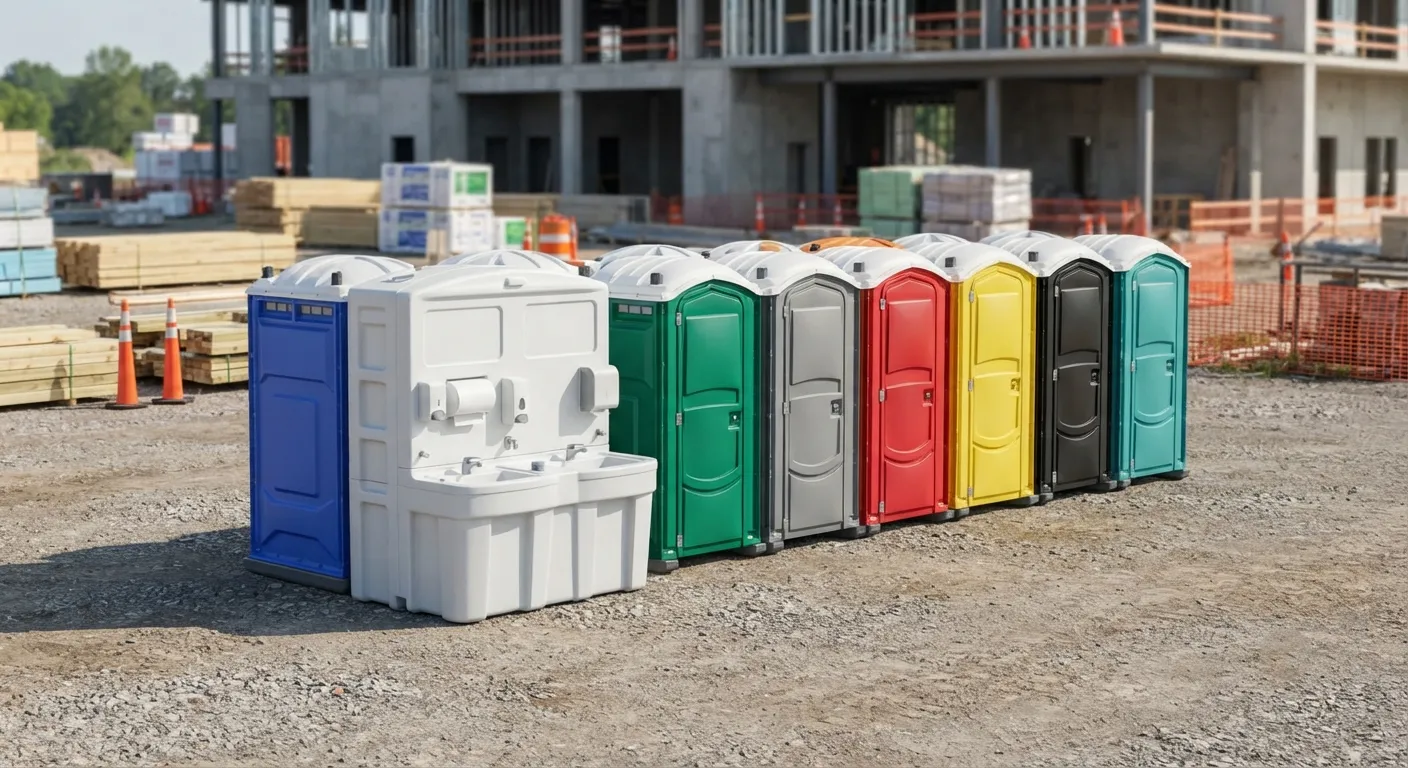
Should we rent a restroom trailer instead of standard units?
For a finisher's area with sponsors, media, or a paid VIP tier, yes, a trailer reads better than a bank of standard units. A 2 stall restroom trailer handles a smaller finish tent, while an 8 stall restroom trailer suits a full festival with thousands of finishers cycling through over a few hours. Trailers need a level pad and truck access, so confirm the site can handle delivery before locking in a date; see restroom trailer rental for pad and hookup specifics. Races with an overnight camp component, like a two-day relay, sometimes add a shower trailer rental for participants staying near the course.
| unit | day | weekend | week |
|---|---|---|---|
| standard | $100 - $350 | $125 - $400 | $130 - $500 |
| ada | $200 - $400 | $199 - $300 | $240 - $240 |
| trailer | $175 - $2,500 | $900 - $3,000 | $1,650 - $1,650 |
Weekend rates suit most one-day races since setup happens Friday and pickup happens Monday. For a race with 5,000 or more participants across Revere and neighboring routes, run the restroom trailer rental cost numbers against a larger standard unit order before deciding. Post-race cleanup also matters: courses generate cups, gel wrappers, and banners, and a roll-off dumpster rental at the finish festival keeps that debris from piling up under OSHA 1926.25 housekeeping practices, which apply to work crews breaking down the event.
How far in advance should we book race restrooms?
Two to three weeks ahead is typical, especially if the course runs through Revere or connects toward Chelsea, 3.3 miles southwest, or Winthrop Town, 3.7 miles south. Larger races with multiple towns on the route need more lead time for permit coordination and unit delivery scheduling.
Do we need handwashing stations separate from the toilets?
Yes. Toilets handle waste, but runners and volunteers also need soap and water, especially near food and hydration tables. A handwashing station rental satisfies 29 CFR 1910.141(d)(2), which requires soap and towels, not just sanitizer.
Can portable toilets be serviced mid-race for a multi-day event?
Yes, on a multi-day race or festival weekend, servicing follows the same interval logic as ANSI/PSAI Z4.3, which sets a baseline of one service visit per week for moderate use. High-traffic race weekends often need a mid-event service call instead of waiting.
What size dumpster fits a finish-line festival?
Depends on vendor count and crowd size. A 10 yard dumpster rental covers a small 5K festival, while a 20 yard dumpster rental suits a half marathon with food trucks and merchandise tents.
Is delivery available for a race route that spans two towns?
Yes, Revere Porta Pros delivers to routes crossing into Everett, 4.4 miles west, or Melrose, 5.5 miles northwest. Confirm exact drop points early since course marshals need clear access lanes for delivery trucks. If the route needs power for timing gear or lighting, crews should know how to brace a temporary power pole before delivery day: anchor it in a stable base, guy-wire anything freestanding above a few feet, and route cords clear of the restroom queue.
Next step
Get a delivery date
Tell us the address, the dates and the headcount. We size the order and confirm the route.