
How Many Porta Potties Do I Need Under OSHA Rules?
Start with a headcount, then run the math straight from 1926.51(c). A 15-person framing crew in Revere needs one standard unit. A 45-person job crosses into the next bracket and needs two toilet seats plus urinals. Once you pass 200 workers, the ratio eases to one seat per 50, which matters on bigger builds near Chelsea, 3.3 miles southwest, where crews often mobilize in phases. Need a fast gut check? Our porta potty needs calculator guide walks the same math with worked examples. For pricing once you know the count, see porta potty rental cost in Revere or the per-day rates page if the job is short. Revere contractors juggling multiple trades on one lot often split orders between standard porta potty rental for the crew and a deluxe flushable unit for supervisors or client walkthroughs. OSHA does not care about comfort tier, only ratio and access, so pick units that clear the headcount first and upgrade from there.
What Does OSHA Say About Handwashing and Water on Site?
1926.51(a)(1) requires an adequate supply of potable water at every workplace, no exceptions for job size. Separately, 1926.51(f)(1) requires washing facilities specifically where workers apply paints, coatings, herbicides or insecticides, or handle other contaminants, not as a blanket handwashing rule for every trade. Painting subs and pesticide crews around Revere need to plan for this before mobilization. General industry sites, as opposed to construction, follow 1910.141(c)(1)(i) instead, so an office renovation crew and a framing crew are not held to the same citation. Renting a handwashing station or a portable sink covers both the water supply requirement and contaminant washdown in one unit. Under 29 CFR 1910.141(d)(2), any washing setup needs soap and towels or a hand-drying device; sanitizer alone does not satisfy it. If your crew sprays or coats anything, budget for a hand sanitizer station as a supplement, not a replacement.
Where Can I Place Portable Toilets on a Revere Job Site?
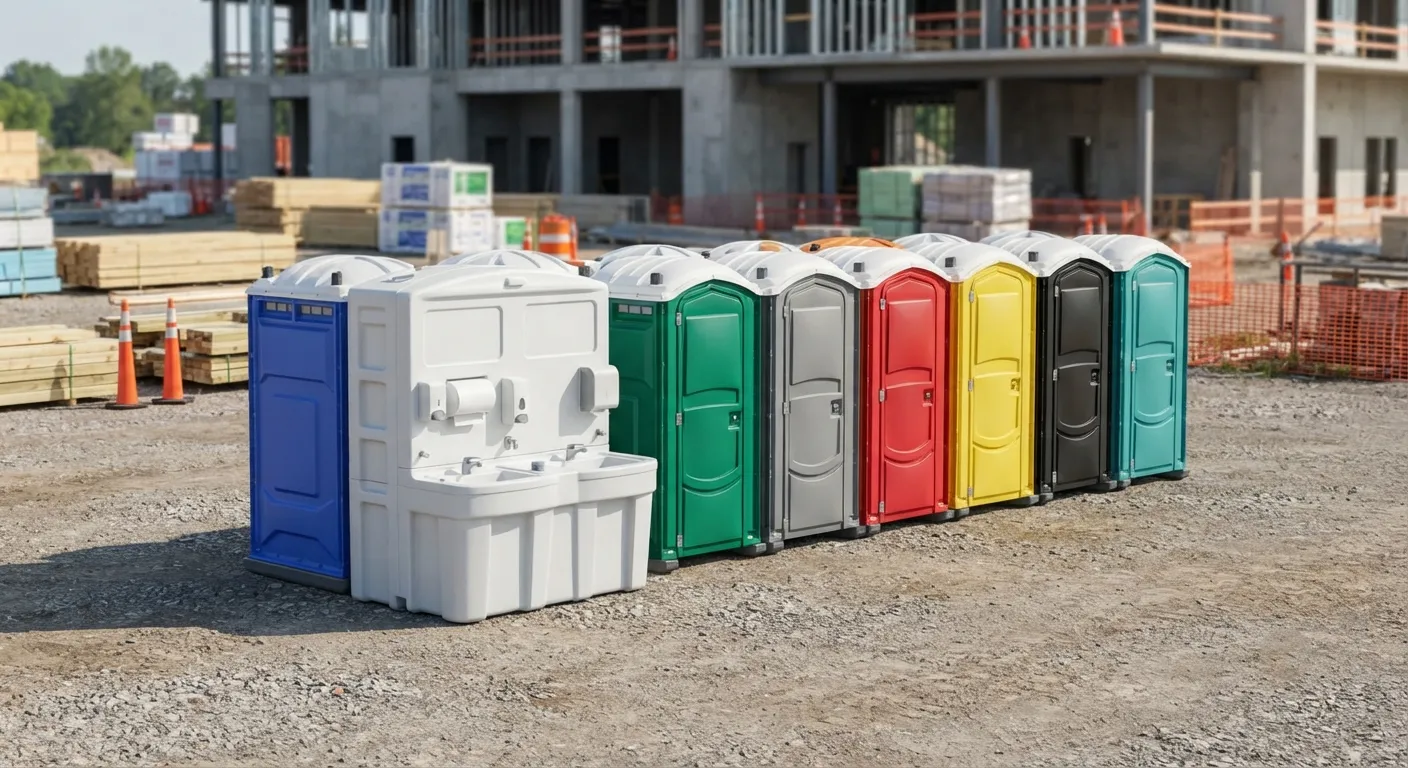
Placement has to account for clearance, not just headcount. ADA Standards 403.5.1 sets a 36 inch minimum clear width on any accessible route to the units, and 404.2.3 requires a 32 inch clear door opening on accessible stalls. When you cluster multiple units on one site, ADA 213.2 requires at least 5 percent to be accessible, with a minimum of one unit no matter how small the cluster. A standard unit runs about 44 by 48 inches on the ground and stands roughly 92 inches tall, so leave room to service it without blocking foot traffic. If a roll-off dumpster is sharing the lot, plan for roughly 60 feet of straight clearance behind the delivery truck. Our porta potty placement guide covers ground conditions and setback distance in more depth, and the ADA restroom requirements page breaks down turning radius and reach range for accessible stalls. Right-of-way placement in Revere needs confirming with the city directly; we have not verified a specific municipal rule for curb or sidewalk setbacks, so check with the city before you stage units on public property. For city-specific permit questions generally, see porta potty permit requirements.
Do OSHA Rules Change for Agricultural or General Industry Sites?
Yes. Field sanitation for hand-labor agricultural work falls under 1928.110, which requires potable water, toilets and handwashing within a quarter mile walk, at a ratio of one facility per 20 employees. That is stricter on distance than most construction sites, where workers can walk further between breaks. If you run a farm stand or seasonal harvest operation outside Revere, our farm and agricultural restrooms page applies 1928.110 directly to that setup. General industry workplaces, meaning fixed indoor facilities rather than active construction, follow 1910.141(c)(1)(i) instead of 1926.51(c), and the employee-count brackets differ slightly. Confusing the two citations is common and it is worth checking which one applies before you order units, since an inspector will ask. For general OSHA-driven sanitation planning across use cases, our OSHA portable toilet requirements guide cluster also links out to construction site services, event restroom rental, and emergency porta potty rental for compliance under tighter timelines.
| unit | duration | typical price |
|---|---|---|
| standard | day | $150 |
| standard | week | $200 |
| ada | week | $185 |
| deluxe | week | $250 |
Revere Porta Pros builds these ratios into every quote, whether it is a single unit for a home renovation or a multi-unit order for a job site running near Everett, 4.4 miles west. If you are pairing sanitation with other site needs, check roll-off dumpster rental, temporary fence rental, or storage container rental for the rest of the lot.
How many porta potties does OSHA require for 20 workers?
One toilet facility covers a crew of 20 or fewer under 1926.51(c). Cross 21 workers and the rule shifts to one toilet seat plus one urinal per 40 people. Revere Porta Pros sizes orders directly off this bracket so you are not guessing at headcount math mid-job.
What is the OSHA distance requirement for portable toilets?
OSHA's construction standard, 1926.51(c), does not set a specific travel distance for portable toilets on a general job site. Agricultural field sanitation under 1928.110 does: a quarter mile walk maximum. Check which standard applies to your Revere site before assuming a distance rule exists.
Does Cal/OSHA have different portable toilet requirements than federal OSHA?
Cal/OSHA rules apply only in California, not Massachusetts. Revere job sites follow federal OSHA standards, primarily 1926.51(c) for construction and 1910.141(c)(1)(i) for general industry. If you operate crews in both states, do not assume the ratios match; confirm separately for each jurisdiction.
Can I use hand sanitizer instead of a handwashing station for compliance?
No. 29 CFR 1910.141(d)(2) requires soap and towels or a hand-drying device at washing facilities; sanitizer does not meet that standard on its own. Pair a hand sanitizer station with a proper handwashing station rather than substituting one for the other.
Do I need an ADA-accessible porta potty on every job site?
Only when you cluster multiple single-user units; ADA 213.2 then requires at least 5 percent accessible, minimum one unit. A single toilet on a small Revere renovation site does not trigger the same rule. Larger sites near Melrose, 5.5 miles northwest, with multiple units should plan for at least one ADA accessible porta potty.
Next step
Get a delivery date
Tell us the address, the dates and the headcount. We size the order and confirm the route.